Burning Characteristics
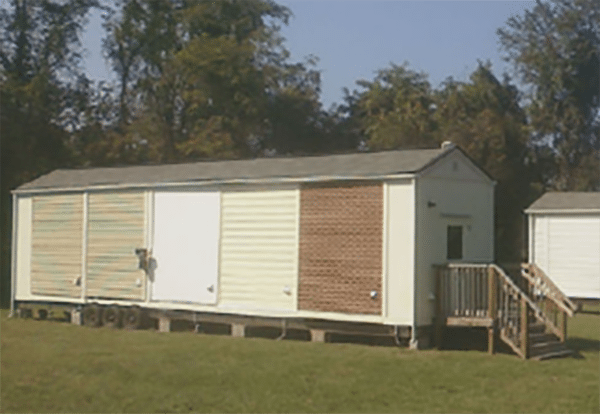
Fullback® Siding Insulation was designed to perform well in fire situations. Extensive tests by independent laboratories confirm excellent performance when exterior walls containing Fullback® are exposed to a radiant heat source (as from a nearby burning building) and from open flame.
Fire Safety Performance
Fullback® Insulated siding is composed of polyvinyl chloride, more commonly known as vinyl or PVC, and foam plastic. Insulated siding complies with building code requirements for rigid PVC siding and foam plastics.
Due to vinyl’s chlorine base, the siding portion of Fullback® Insulated Siding does not readily ignite and burn and resists flame spread. Vinyl siding routinely demonstrates a Class A flame spread rating (that is, a flame spread index of 25 or less when tested under ASTM E84). Rigid vinyl will not sustain combustion without an external source of heat, and will tend to self-extinguish if that heat is removed.
Foam plastics used in the insulation portion contain a flame retardant designed to limit rapid flame spread. Foam plastic insulation products are tested and classified for flame spread and smoke-development under ASTM E84/UL 723 by Underwriters Laboratories and other certified agencies. All foam plastics used in insulated siding meet or exceed the requirements of the nation’s building codes and applicable federal, state and industrial requirements. For results pertaining to a specific foam plastic insulation product, consult the manufacturer’s technical data.
All organic materials (that is, anything containing carbon) can be made to ignite. Both rigid PVC and EPS foam are relatively ignition-resistant, especially compared with wood. The table below shows the ranges of ignition temperatures cited by a variety of published sources for the three materials. A piloted ignition temperature is the temperature at which a material will ignite in the presence of an external spark or flame; the self-ignition temperature is what is needed for ignition without an external ignition source (this distinction is not applicable to wood). Clearly, both of the major components of Fullback® Insulated Siding resist ignition at temperatures significantly higher than needed for the ignition of wood.
| Rigid PVC | EPS Foam | Wood Framing Lumber33 | |
| Piloted Ignition | 720° to 750°F (380° to 400°C) |
650° to 700°F (340° to 370°C) |
480° to 660°F (250° to 350°C) depending on rate of heating |
| Self-ignition | 840° to 1020°F (450° to 550°C) |
840° to 930°F (450° to 500°C) |
Additionally, ASTM D2863 tests show that both rigid PVC (at 45 percent) and EPS insulation (minimum 24 percent) need higher amounts of oxygen than the 21 percent found in normal atmospheric conditions in order to sustain combustion. Therefore, Fullback® Insulated Siding is more difficult to ignite and less likely to sustain independent burning than most combustible building materials such as wood.
Exterior cladding is involved in only a fraction of all residential fires. Indeed, most house fires start on the insides of homes and are contained within their structures of origin. The National Fire Protection Association’s (NFPA) February 2007 Home Structures Fires report shows that fewer than 3 percent of all fires go beyond the structure of origin, and fewer than 2 percent of all home fires’ sources of origin are related to the exterior wall surface.34 In fact, only 4 percent of all residential fires start on the outside of the structure but do not necessarily originate with the exterior cladding. The report does not cite any exterior wall coverings (including insulated siding, brick and stucco) as the cause of residential fires.
As the manufacturer of Fullback®V siding insulation, we are committed to keeping our products a low fire risk. Fullback®V siding insulation is made from materials that have inherently favorable fire performance characteristics and are tested to confirm adherence to all applicable building and fire code requirements.
Flame Retardant
Fullback®V siding insulation is molded using only modified grades of expanded polystyrene and therefore contains a flame retardant called hexabromocyclododecane (HBCD), which is designed to decrease flammability due to accidental ignition from a small flame source. The expanded polystyrene manufactured from these materials is routinely tested under UL specifications to insure that they meet or exceed the requirements of the nation’s building codes and applicable industrial, federal and state requirements.
When used as a flame retardant in polystyrene foam insulation, HBCD remains in the polymer matrix throughout the insulation's product life. The HBCD Risk Assessments issued by Environment Canada and the European Commission have confirmed that there are no human health concerns posed by HBCD.
Click here for more information on HBCD in Fullback®V siding insulation.
Flame Spread and Smoke developed Ratings
For nominal 1# product: Foamed Plastic Surface Burning Characteristics, R18532 <27TL> 6 Maximum+
| Flame Spread | 5# |
| Smoke Developed | 100-200# |
+ - Installed in a thickness, or stored in an effective thickness, as indicated, for a density of 1.00 lb.ft3
#- Flame spread and smoke developed recorded while material remained in the original test position. Ignition of molten residue on the furnace floor resulted in flame travel equivalent to calculated flame spread classification of 35-70 and smoke developed classification of over 500.
For nominal 1.5# product: Foamed Plastic Surface Burning Characteristics, R18532 <27TL> 6 Maximum+
| Flame Spread | 15# |
| Smoke Developed | 165# |
+ - Installed in a thickness, or stored in an effective thickness, as indicated, for a density of 1.50 lb.ft3
#- Flame spread and smoke developed recorded while material remained in the original test position. Ignition of molten residue on the furnace floor resulted in flame travel equivalent to calculated flame spread classification of 125 and smoke developed classification of over 500.
Chimney Effect
In addition, Fullback® siding insulation completely fills the hollow void that exists behind conventional vinyl and aluminum siding products. Since there are no air pockets, the insulation completely eliminates the "chimney effect" that can contribute to the flammability of other siding systems.
33Babrauskas, V., Ignition of Wood: A Review of the State of the Art, pp.71-88 in Interflam 2001, Interscience Communications Ltd.< London, 2001.
34National Fire Protection Association, Fire Analysis and Research Division. Home Structures Fires. February 2007.
Click below for a fire performance fact sheet published by the Vinyl Siding Institute regarding the vinyl component of Fullback® Insulated Siding.